


Shandong Shenzhou Protection Material & Products Co., Ltd. (Shenzhou for short) was established in 2009. As the earliest enterprise to focus on the research and development of stab-proof materials in China, we have been solely committed to developing and improving the application of non-metallic composite materials in the anti-stab field for 14 years, continuously leading and innovating various technical indicators of anti-stab vest and bulletproof and stab proof dual protective vest. As the best professional scientific research and production enterprise engaged in composite material development in China, We integrate the R&D, production, and sales of high-performance stabproof, stabproof, and bulletproof materials and products.
Why Choose us?
Wide Range of Applications
Our products have been widely used in various protection fields, such as police, military, security, law enforcement, civilians, etc.
Quality Assurance
In terms of quality assurance, our production strictly meets the standards. Adopt a full set of industry-leading testing equipment to ensure the quality of our products.
Complete Qualifications
We have applied patent for its products, which is known as Shenzhou Ding. Shenzhou materials and products have passed both Chinese and International industrial tests and certificates, such as but not limited to the Testing for Quality of Security & Police Electronic Products under the Ministry of Public Security of P.R. CHINA, ISO 9001:2015 Quality Management certificate.
Professional Technical Team
Owning 14 years of professional experience in developing and producing non-metal stab-proof composite sheets, our R&D team composed of one full professor and three associate professors has constantly broken through the core technology of protective materials. In addition, scientific researchers account for half of our company.
Broad Market
Since the foundation of 2009, our protection materials have supplied over 80% of the Chinese market. Besides the USA, we did not stop steps on other states' markets around the world. Welcome to establishing partnerships with more and more international customers.
Good Service
Full-time after-sales personnel provide services 24 hours a day. If any problems occur during the use of the device, users can contact us, we will reply to you within 24 hours by emails.
-

Lightweight Bulletproof Stab Proof Aramid Fabric
When it comes to personal security and safety, the need for protection from both ballistic and stab threats cannot be underestimated. This is where a bulletproof and stabproof panel like SZ FC-D-023
Add to Inquiry -
Bulletproof And Stab Proof Aramid Fabric
Bulletproof and stab-proof aramid fabric is a type of textile material designed to provide protection against bullets and stabbing attacks. Aramid fibers are synthetic fibers known for their high
Add to Inquiry -
Bulletproof and Stab Proof Materials
Model: SZ FC-D-001. Stab Proof Protection Level: NIJ STD-0115.00 Level 1 Blade/UK HOSDB KR1 Blade.. Bulletproof Protection Level: NIJ STD-0101.06 Level IIIA 9mm. Material: FC-1T and PE UD. Protection
Add to Inquiry -
Model: SZ FC-D-002. Stab Proof Protection Level: NIJ STD-0115.00 Level 1 Blade/UK HOSDB KR1 Blade.. Bulletproof Protection Level: NIJ STD-0101.06 Level IIIA 9mm. Material: FC-1S stab proof material
Add to Inquiry -
Model: SZ FC-D-003. Stab Proof Protection Level: NIJ STD-0115.00 Level 1 Blade/UK HOSDB KR1 Blade.. Bulletproof Protection Level: NIJ STD-0101.06 Level IIIA 9mm. Material: FC-1Y and PE UD. Protection
Add to Inquiry -
Stab and Ballistic Vest Composite
Model: SZ FC-D-004. Stab Proof Protection Level: NIJ STD-0115.00 Level 1 Blade/UK HOSDB KR1 Blade.. Bulletproof Protection Level: NIJ STD-0101.06 Level IIIA 9mm. Material: FC-2 and PE UD. Protection
Add to Inquiry -
Model: SZ FC-D-005. Stab Proof Protection Level: NIJ STD-0115.00 Level 1 Spike/UK HOSDB KR1+SP1 Spike.. Bulletproof Protection Level: NIJ STD-0101.06 Level IIIA 9mm. Material: FC-1T and PE UD.
Add to Inquiry -
Bulletproof and Stab Proof Aramid Fabric
Model: SZ FC-D-006. Stab Proof Protection Level: NIJ STD-0115.00 Level 1 Spike/UK HOSDB KR1+SP1 Spike.. Bulletproof Protection Level: NIJ STD-0101.06 Level IIIA 9mm. Material: FC-1S and PE UD.
Add to Inquiry -
Bulletproof Stab Proof Vest Composite Sheet
Model: SZ FC-D-007. Stab Proof Protection Level: NIJ STD-0115.00 Level 1 Spike/UK HOSDB KR1+SP1 Spike.. Bulletproof Protection Level: NIJ STD-0101.06 Level IIIA 9mm. Material: FC-1Y and PE UD.
Add to Inquiry -
Bulletproof and Stab Resistant Composite Fabric
Model: SZ FC-D-008. Stab Proof Protection Level: NIJ STD-0115.00 Level 1 Spike/UK HOSDB KR1+SP1 Spike.. Bulletproof Protection Level: NIJ STD-0101.06 Level IIIA 9mm. Material: FC-2 and PE UD.
Add to Inquiry -
Bullet Stab Proof Vest Material
Model: SZ FC-D-009. Stab Proof Protection Level: NIJ STD-0115.00 Level 2 Blade/UK HOSDB KR2 Blade.. Bulletproof Protection Level: NIJ STD-0101.06 Level IIIA 9mm. Material: FC-1T and PE UD. Protection
Add to Inquiry -
Model: SZ FC-D-010. Stab Proof Protection Level: NIJ STD-0115.00 Level 2 Blade/UK HOSDB KR2 Blade.. Bulletproof Protection Level: NIJ STD-0101.06 Level IIIA 9mm. Material: FC-1S and PE UD. Stab proof
Add to Inquiry

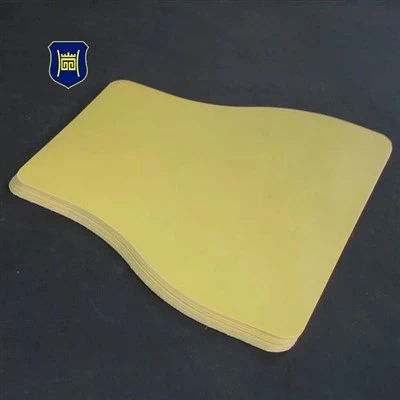
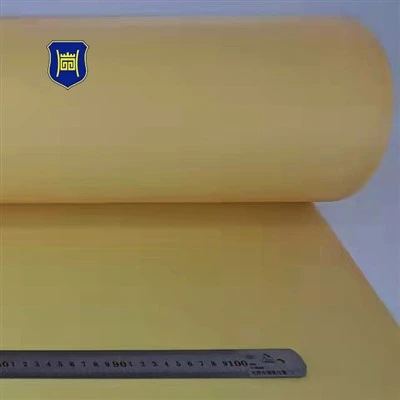


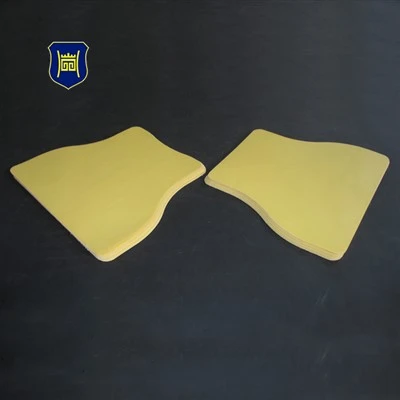
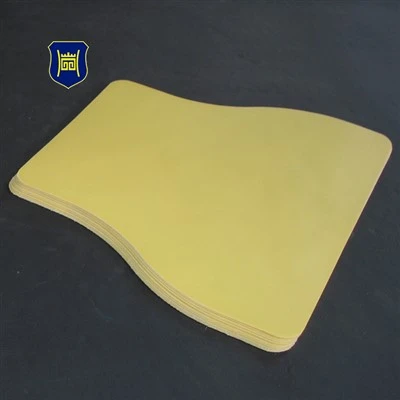

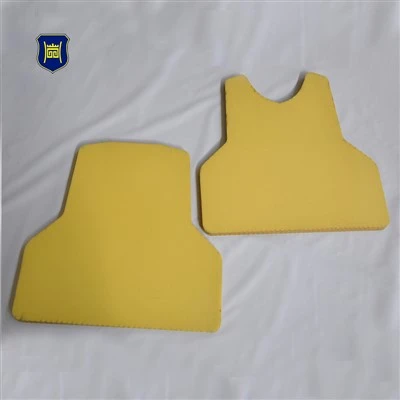
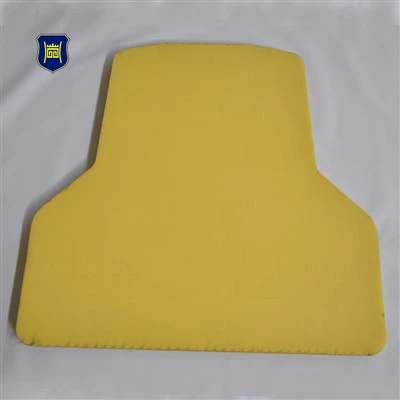
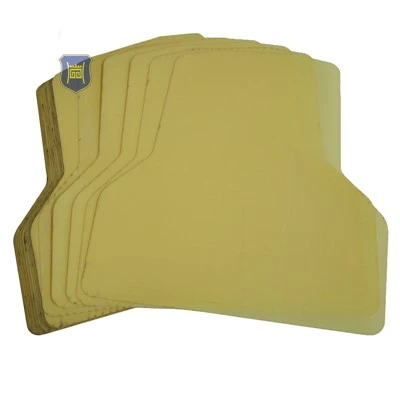
What is Bulletproof And Stab Proof Material?
Bulletproof and stab-proof materials are designed to provide protection against both ballistic threats (such as bullets) and sharp objects (such as knives or spikes). These materials often combine the properties of bullet-resistant and stab-resistant materials to create a versatile protective barrier.
Unbeatable Protection
Different bulletproof vests offer varying degrees of protection but even the lowest NIJ level available, Soft Armor Level II, stops .357 Magnum and 9mm Full Metal Jacket (FMJ) from short-barrel handguns.
Discreet Covert Styles
Many people imagine body armor to be bulky and obvious; however, with modern materials covert bulletproof vests are almost impossible for the average person to detect. Meticulous expert designers make these bulletproof vest styles to fit against the wearer’s body. The aim is to wear covert vests beneath other items of clothing for discreet full protection. Covert bulletproof protection offers an obvious advantage for security personnel working undercover. It also makes it far easier for members of a covert security detail to keep safe while blending in with others.
Intimidating Overt Body Armor
Certain assignments might call for visible security personnel wearing overt bulletproof vests. Overt body armor can also include bulletproof accessories and clothing for security personnel. This might include slash-resistant jackets and shirts, bulletproof helmets, and arm guards. But, as ever, the most appropriate form of protection often depends on the assignment.
Flexible And Comfortable
They also allow security personnel to remain comfortable, cool, and flexible while they keep both themselves and whoever they are guarding safe. This is because another benefit of modern bulletproof vests is how easy they are to wear, even for extended periods. While this comfort will depend on the vest itself, top-quality soft armor vests are flexible enough to allow for a full range of movement and breath-ability.
Steel
Steel bulletproof materials are heavy duty, yet at just a few millimeters thick, extremely effective in stopping modern firearm rounds. The steel deforms under the stresses from the bullet’s energy but prevents the rounds from reaching their intended targets.
Ceramic
As a material made from clay heated to extremely high temperatures, ceramic sits just below diamonds on the hardness scale, far above the metal used for bullet making. When layered with Kevlar, ceramic can effectively dissipate the energy from rounds of all sizes. When impacted, the ceramic layers disintegrate into a powder under the bullets’ forces.
Fiberglass
When at the appropriate thickness, fiberglass can easily deflect bullets by absorbing the energy through its layers. When placed between steel plates, this ultra-lightweight material effectively distorts the rounds and delaminates to capture the bullets within the structure.
Wood
By increasing the density of wood threefold, seemingly ordinary lumber has the potential to halt a bullet in its tracks. In addition to the strength improvements, the density also increases the durability of the wood to keep it from deforming under the stress of the bullets’ forces.
Kevlar
Perhaps one of the better-known bulletproof materials, Kevlar is a synthetic fiber that’s heat resistant and incredibly strong. It’s also lightweight, making it a popular choice for wearable bulletproof items. Kevlar is used in both military and civilian applications.
Polyethylene
Ultra-high-molecular-weight polyethylene (say that ten times fast) is a plastic that can be found in Tupperware. The ballistic material is remarkably reliable and affordable. Some reports even show that this inexpensive plastic is better than Kevlar at stopping certain bullets because it’s impervious to moisture.
Polycarbonate
The final bulletproof material on our list is Polycarbonate, a strong, transparent material that is used to make glass ballistic resistant.
Step 1: Polymerization
The process begins with the combination of monomers to form a sturdy, finely-grained para-aramid polymer. This material has the typical heat resistance and chemical properties of para-aramid.
Step 2: Continuous Filament Yarn Spinning
Next, the polymer is dissolved in sulfuric acid to create a liquid crystalline solution. The solution is then spun into fine, naturally yellow, or dye-infused continuous filament yarns by a wet-spinning process. These fibers are completely crystalline, with molecular chains running parallel to the filament axis, providing the yarns with their unique properties.
Step 3: Converting
In the final stage, the continuous filament yarns are crimped to produce staple fiber, treated with a finishing agent, and then cut to the desired length to create short-cut fibers. The untwisted continuous filament yarns can now also be twisted to enhance their fit-for-use characteristics.
Step 4: Converting To Pulp
Filament yarns are chopped and mixed with water to form a fibrous substance called wet pulp. This wet pulp can be sold directly or dried to create and sell as dry pulp.
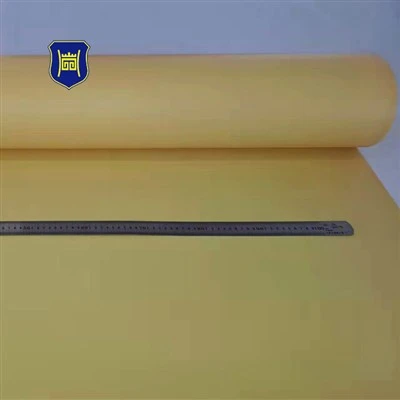
Features of Bulletproof And Stab Proof Material
The materials have a tensile strength equivalent to that of steel and a traction modulus that can be up to two times higher than that of glass. These properties make it a balanced material with excellent tensile strength.
The materials have poor compression characteristics, which is a probable consequence of their poor adhesion to resins.
The materials have poor compression characteristics, which is a probable consequence of their poor adhesion to resins.
The fiber is elastic under a low load and plastic under a heavy load, demonstrating a degree of similarity with metals.
The materials are highly sensitive to UV rays (loss of characteristics and discoloration). It is advisable to store aramid fiber materials away from light.
Materials have good thermal resistance. The elastic modulus under tension keeps at 300 °C more than 80 % of its value at room temperature. They are used continuously at an average temperature of 200 °C. They have a coefficient of thermal conductivity of around 0.05 W.m-1.K-1.
Maintenance Tips for Specific Types of Bulletproof Vests
Tips and Considerations for Soft Body Armor Vests
- Follow the manufacturer’s cleaning instructions specific to your soft body armor vest.
- Avoid machine washing or drying unless explicitly stated as safe by the manufacturer.
- Inspect the outer carrier for any wear, loose threads, or damage that may affect the vest’s overall integrity.
- Avoid excessive exposure to extreme temperatures, as it can impact the effectiveness of the vest’s materials.
- Store the vest flat or hung to avoid creasing or folding that can weaken the fibers.
Special Care Instructions for Kevlar-Based Vests
- Follow the manufacturer’s guidelines for cleaning and maintenance specific to Kevlar-based vests.
- Avoid using harsh chemicals, bleach, or abrasive cleaners that can damage the Kevlar fibers.
- Inspect the vest for any signs of Kevlar degradation, such as yellowing or brittleness.
- Store the vest in a cool, dry place away from direct sunlight to prevent UV damage to the Kevlar fibers.
- If you notice significant damage or degradation to the Kevlar fibers, consult a professional or contact the manufacturer for guidance.
Suggestions for Using Bullet-Resistant Materials
Comprehensive Security Assessment
The decision to use or not use bullet-resistant materials should only be made after a comprehensive security assessment has been conducted. The security assessment should provide guidance as to where bullet-resistant materials should be used, and establish the minimum UL rating level required based upon the level of risk at the specific facility.
Systems Approach
A systems approach must be taken when designing a bullet-resistant barrier; the wall, glazing, and any accessories must all be rated to provide the minimum desired UL rating level. It doesn't make sense to provide a Level 3 rated window when the wall surrounding the window is unprotected. Also consider the possibility of ricochet and the potential for a bullet to penetrate the adjacent walls, ceilings, and floors.
Using Ul-Listed And Labeled Materials
Always use materials that are UL-listed and labeled. Some manufacturers can be deceptive and use terms such as "tested to UL standards", "meets requirements of UL Level 3", etc. even though their products haven't actually been tested by UL.
Thickness And Weight Of Materials
The thickness and weight of bullet-resistant materials can have an impact on building construction and may affect everything from the size of the structural beams to the type of window coverings used. Be sure to involve your architect or other design professional in the planning of your bullet-resistant system.
Security Training
Employee security awareness training must be provided in conjunction with the installation of a bullet-resistant barrier. Employees need to know how to react when a weapon is presented, even if they are behind a protective barrier. Employees may also be at increased risk when entering or leaving the protected area, and need to be given guidelines on how this can be accomplished safely.
Proper Handling and Usage of Bulletproof Vest
Using the Vest as Intended and Following Manufacturer Guidelines
To maintain the effectiveness of your bulletproof vest, it’s crucial to use it as intended and follow the manufacturer’s guidelines. Pay attention to any specific instructions regarding wear, care, and maintenance provided by the manufacturer. Using the vest in ways contrary to its intended purpose may compromise its protective capabilities and lifespan.
Avoiding Excessive Bending, Folding, or Mishandling
Excessive bending, folding, or mishandling of your bulletproof vest can damage its components and weaken its protective capabilities. Avoid bending or folding the vest beyond what is necessary for storage or transport. Mishandling, such as dragging the vest on rough surfaces or subjecting it to unnecessary stress, should be avoided as well. Treat your vest with care to preserve its integrity.
Ensuring Proper Fit and Adjustment for Optimal Protection
Proper fit and adjustment are essential for optimal protection and comfort. Follow the manufacturer’s guidelines for sizing and adjustment to ensure the vest fits snugly and securely. A properly fitting vest ensures that the protective panels are in the correct position to provide maximum coverage. Regularly check the fit and make any necessary adjustments to ensure proper alignment and comfort.
Our Certificates


FAQ
Q: What is the difference between stab vest and bulletproof vest?
Q: Can a knife cut through a bulletproof vest?
Q: Will a stab-resistant vest stop slashing?
Q: What effect do stab-proof vests have on handgun bullets?
Q: Do stab vests expire?
Q: Is stab proof vest also bulletproof?
Q: Why consider spike protection in stab-proof vests?
Q: What are the benefits of bulletproof fabric?
Q: What material is 100% bulletproof?
Q: How does bulletproof fabric work?
Q: How the NJJ standard compares to UL 752?
Q: What is the Manufacturing Process for Ballistic Materials?
●Injection molding uses a machine to inject molten material into a mold to form the desired shape. Casting is done by pouring molten metal or other substances into a mold to form the desired shape.
●There are three main steps to the manufacturing process for ballistic materials: Molding, forming, and finishing.
Q: What are the characteristics of a bulletproof vest?
Q: What can bulletproof vests withstand?
Q: Can bulletproof vests fail?
Q: Can a bulletproof vest stop a sniper bullet?
We're professional bulletproof and stab proof material manufacturers and suppliers in China. Please feel free to buy high quality bulletproof and stab proof material for sale here from our factory. For more information, contact us now.
stab resistant bag, stab proof sleeve